Tuesday, March 25, 2014

David Grossman conveys parental bereavement in Falling Out of Time

Image
“As moving as are each of these expressions of grief the cumulative effect of Falling Out of Time‘s nearly 200 pages is even more powerful. It certainly conveys bereaved parents’ pain to readers who have not suffered that loss and may help some mourning parents work through their grief, though others may feel it reopens emotional wounds.” -- from my New York Journal of Books review of David Grossman's new multi-genre book. Additional remarks that appeared in a different and now defunct publication begin with the next paragraph.

Israeli books: David Grossman describes losing a child in Falling Out of Time

For most of human history and pre-history childhood mortality was a fact of life, and couples had many children in the hope that at least some of them would live long enough to become adults. As recently as the Nineteenth Century many if not most adults survived the loss of one or more siblings who had succumbed to childhood illnesses, and parents losing children to those illnesses was quite common. The desire to reconnect with lost loved ones made surviving relatives vulnerable to charlatans posing as spiritualists.

Only since the Twentieth Century has medical science advanced to the point where parents could realistically expect all their children to reach adulthood, an expectation that has resulted in parents choosing to have fewer children and which perhaps makes the loss of a child all the more painful. It is that particularly poignant pain that Israeli writer David Grossman (one of whose sons died in combat in Israel's 2006 war against Hezbollah) captures in his new book Falling Out of Time which will be published tomorrow by New York based publisher Knopf.

Part poetry, part prose, and part play, the characters in Falling Out of Time address their dead children and share their grief with one another. In my New York Journal of Books review of the book I write:

“As moving as are each of these expressions of grief the cumulative effect of Falling Out of Time‘s nearly 200 pages is even more powerful. It certainly conveys bereaved parents’ pain to readers who have not suffered that loss and may help some mourning parents work through their grief, though others may feel it reopens emotional wounds.”

For a fuller discussion of the book see my NYJB review.
Image David Grossman

Thursday, February 27, 2014

Jewish books: Ellen Litman's Mannequin Girl describes childhood in 1980s Moscow

Image
In my New York Journal of Books review I describe Ellen Litman's second novel Mannequin Girl as “a welcome addition to the coming of age genre that will appeal both to adult readers and to precocious teenagers.” Also see my examiner article about this novel set in 1980s Moscow, which begins with the next paragraph.

Jewish books: Ellen Litman's Mannequin Girl describes childhood in 1980s Moscow

To those of us who participated in rallies and other activities in the 1970s and 1980s on behalf of the right of Jews living in the Soviet Union to emigrate the complete lack of Jewish ritual observance in the family life of Kat Knopman and her parents Misha and Anechka in 1980s Moscow as depicted in Ellen Litman’s second novel Mannequin Girl (forthcoming from W.W. Norton in the middle of next month) will come as no surprise. Kat has a physical disability and attends a school for children with her condition, and amid increasing anti-Semitism during the USSR’s final years her Jewishness also becomes a disadvantage.

What is surprising is how normal Kat’s childhood seems despite her disability and the novel’s setting. Some aspects of childhood—friendships, rivalries, and being both the victim and perpetrator of malicious behavior—are more or less the same in most countries.

I related to Kat on a personal level, because like her I am the child of intellectual parents, and during my childhood and young adulthood I too felt the burden of being expected to realize my potential.

In my New York Journal of Books review I describe Mannequin Girl as “a welcome addition to the coming of age genre that will appeal both to adult readers and to precocious teenagers.”ImageEllen Litman

Sunday, January 19, 2014

Books: E.L. Doctorow's novel Andrew's Brain explores a brain scientist's mind

Image In my New York Journal of Books review I describe E.L. Doctorow's new novel as “an enjoyable page turner” that is “both bittersweet and disturbing.” Additional remarks that appeared in a different and now defunct publication begin with the next paragraph.

Books: E.L. Doctorow's novel Andrew's Brain explores a brain scientist's mind

Last Tuesday, April 14, 2014, New York publisher Random House published Andrew’s Brain, the new novel by multiple award winning writer E.L.Doctorow whose writing and publishing career spans half a century. In my New York Journal of Books review I note that Andrew’s Brain has more in common with Doctorow’s short stories than with his novels.

Doctorow’s novels usually feature a large cast of characters with narratives reflecting multiple perspectives. Andrew’s Brain is more like a monologue in which the title character narrates his life story to a therapist. Andrew is a neuroscientist whose life work is studying how the brain creates the mind. In the novel he explores his own mind with his therapist.

The publication of the book is timely. Last spring President Obama announced the Brain Research through Advancing Innovative Neurotechnologies (BRAIN) Initiative, a federally funded project to begin in fiscal year 2014 to map the activity of every neuron in the human brain.

But readers hoping to learn something about neuroscience will be disappointed; the novel shows little evidence that Doctorow has devoted the kind of extensive background research to brain science as he did to the historical settings of his previous novels. Nonetheless Andrew’s Brain succeeds as a work of fiction which I describe in my NYJB review as “an enjoyable page turner” that is “both bittersweet and disturbing.” For a fuller discussion of the book read my NYJB review.

Wednesday, January 8, 2014

Book review | Leaving the Sea: Stories by Ben Marcus

In my NYJB review of Leaving the Sea by Ben Marcus I recommend the book "to serious readers who will want to reread its stories gaining new insights with each reading.” Additional remarks that appeared in a different and now defunct publication begin with the next paragraph.

Books: novelist Ben Marcus returns to the short story in Leaving the Sea

Future literary scholars may look back to the second decade of the Twenty-first Century as a silver age of the short story. The golden age would be the late Nineteenth through the middle of the Twentieth Century.

After that a writer's book of short stories became more often than not a journeyman’s apprenticeship on her way to becoming a novelist. Until recently writers like John Updike, who continued to publish in several genres over the decades, have been the exception.

Now more fiction writers alternate between the novel and the short story. Junot Diaz, for example, followed his debut novel with a second collection of short stories instead of with another novel. After four decades of novel writing Amos Oz returned to the short story in his last two fiction books. And last year the Nobel Prize in literature was awarded to Alice Munro who only writes short stories.

And now novelist Ben Marcus returns to the short story inLeaving the Sea, a book of short stories published today by New York publisher Knopf. Some of its 15 stories predate his most recent novel The Flame Alphabet and several share its dystopian theme. For a fuller discussion of Leaving the Seasee my New York Journal of Books review in which I recommend it to serious readers.

Wednesday, December 11, 2013

Book review: The Remains of Life by Zureya Shalev

ImageFrom my NYJB review: “. . . readers prone to depression might consider acquiring a prescription for antidepressant medication before attempting to read The Remains of Love.” Additional remarks that appeared in a different and now defunct publication begin with the next paragraph.

Israeli books: Zeruya Shalev's 5th novel views family through a Freudian lens

Israeli author Zeruya Shalev's fifth novel The Remains of Love, published yesterday by Bloomsbury, departs from the first person narration of her previous fiction in favor of a third person narrator whose attention alternates between three protagonists. Ms. Shalev's novels are known for their raw emotion (I strongly recommend her previous novelThera, but only to emotionally stable readers). In my New York Journal of Books review of The Remains of Love I note that "by shifting between the characters the emotion is diffused and less intense" than Thera, though it is still "emotionally powerful," and I recommend the new novel "to readers who enjoy psychological fiction about family dynamics written in dense prose."

Of the book's three protagonists Dina most closely resembles her author, both of whom were born on kibbutzim, moved with their families to urban areas as children, and as adults married and became mothers of only children. Ms. Shalev's left-wing politics are represented by Dina's brother Avner, a human rights lawyer.

Her characters have solipsistic perspectives, but that should not reflect badly on their author. In 2004 while walking in Jerusalem's Rehavia neighborhood after dropping her child off at kindergarten a passing bus was blown up by a suicide bomber resulting in injuries to Ms. Shalev from which it took four months to recover. After such a trauma a person of weaker character might have become politically neoconservative, but if Avner is any indication it appears Ms. Shalev stands by her progressive principles,

One aspect of Jerusalem life not reflected in her fiction is the extent to which her secular characters have become an ever smaller and isolated minority within that increasingly Orthodox city. It would not be surprising if characters in her future novels will have moved to the western suburbs such as Mivaseret Zion.
ImageZeruya Shalev

Friday, November 22, 2013

JFK: Lines of Fire, a Verse Docu-drama

Image
On 11/22/63 I was a 4th grader in PS 110 in Manhattan. That afternoon our lesson was interrupted by a radio broadcast over the PA system describing the shooting and eventually President Kennedy's death. Only then did the principal or asst. principal announce early dismissal. On the door of my bedroom I had a poster of the presidents and added "-1963" under the picture of President Kennedy. Three decades later I wrote JFK: Lines of Fire, a Verse Docu-drama

JFK: Lines of Fire is a sequence of dramatic documentary vignettes culled from the literature concerning the assassination of President Kennedy. . Many of these found poems are dramatic monologues in the voices of people who had information about the assassination and either failed to prevent it or lacked a context to understand such information until it was too late. These accounts share certain emotional undercurrents, the need to act balanced by a sense of resignation, the shock of recognition balanced by a callous bravado. Whether or not Oswald acted alone or was nuts, there was (is) a wider insane acceptance of violence that (through these dramatic voices) provides an emotional context to this event. In this sense the real subject of this book is our American vernacular and the ways these themes are expressed in our speech. JFK: Lines of Fire was first published by PulpBits in 2003; PulpBits went out of business in March 2007, and I am happy to make it available here.

Tuesday, October 29, 2013

Book review: The Gorgeous Nothings: Emily Dickinson’s Envelope Poems

Image
In my New York Journal of Books review I describe The Gorgeous Nothings as “. . . one gorgeous book . . . like attending a museum exhibition in the comfort of one’s own home.” For a comparison between Ms. Dickinson's draft of a poem and the posthumously published version see an article that appeared in a different and now defunct publication, which begins with the next paragraph.

Books: The Gorgeous Nothings: Emily Dickinson’s Envelope Poems

In The Gorgeous Nothings: Emily Dickinson’s Envelope Poems, published today by New Directions, we learn that the poem her posthumous editor published as

“I have no Life but this —
To lead it here —
Nor any Death — but lest
Dispelled from there —

“Nor tie to Earths to come —
Nor Action new —
Except through this extent —
The Realm of you —“

is based on the following first draft Ms. Dickinson wrote in pencil on the back of an envelope:

“I have no

life [to] [but] [live] [this]

[But] [To] lead

it here

Nor any

Death but

lest dispelled

+Abased from

there —

“Nor +Plea

for World s

to come

+Nor Wisdoms

new

Except through

this +Extent

“The loving

you —

Withheld —

+

deprived

from

there —

+ Nor tie to

+Expanse —“

The original had wider spaces between the words than examiner's publishing tool allows. The plus signs (+) indicate alternate words and phrases Ms. Dickinson considered as she revised her poems.

From the published versions of her poems readers would hardly guess how open her original drafts were. The published versions seem formal and of their time, while the drafts seem experimental and ahead of her time. Ms. Dickinson did not want her work published during her lifetime for fear of just such editing by other hands.

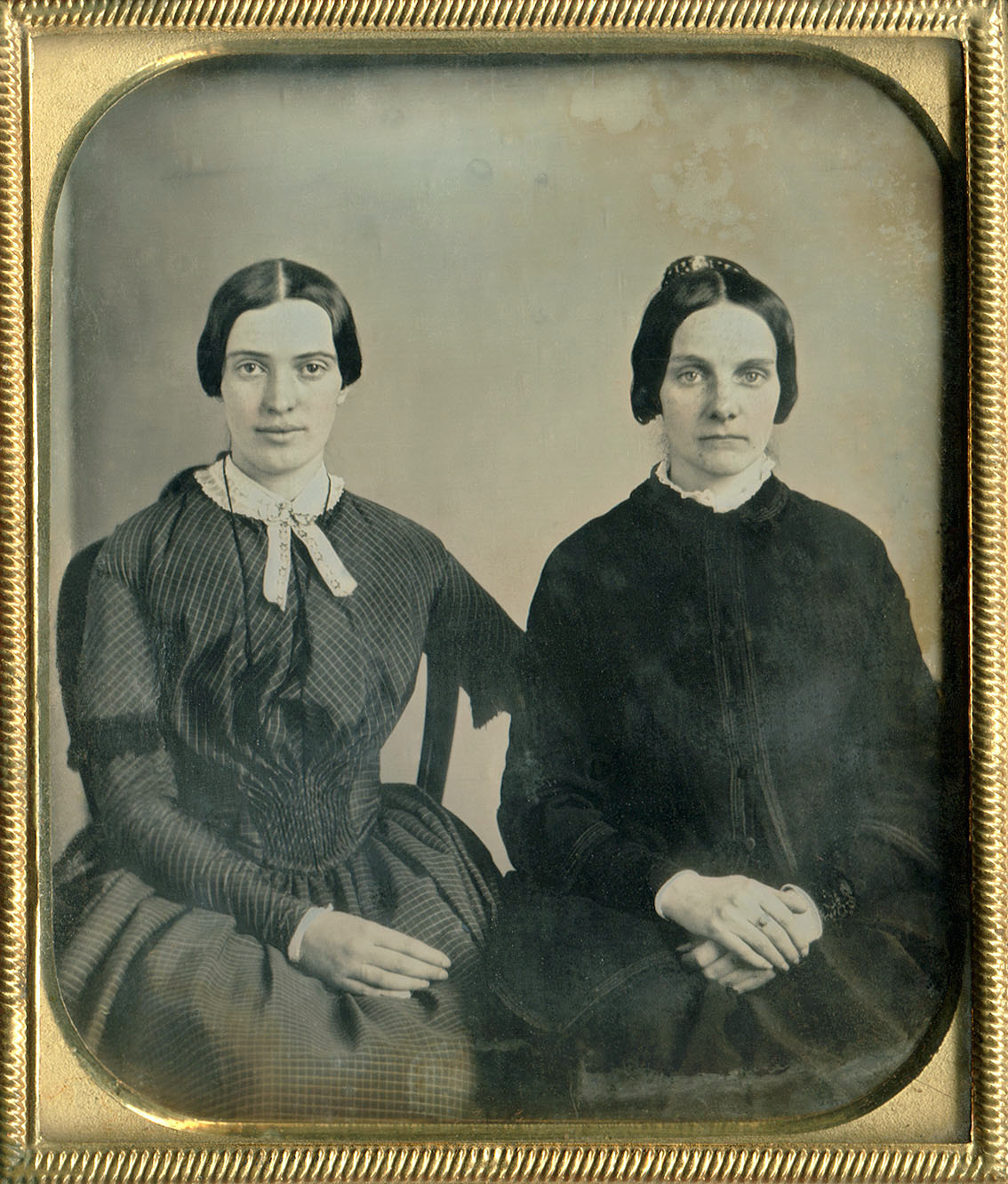
In my New York Journal of Books review I describe The Gorgeous Nothings as “. . . one gorgeous book . . . like attending a museum exhibition in the comfort of one’s own home.” It’s a book every Emily Dickinson fan and armchair literary sleuth will want to own.ImageEmily Dickinson (left) at age 29.