Sunday, November 27, 2016
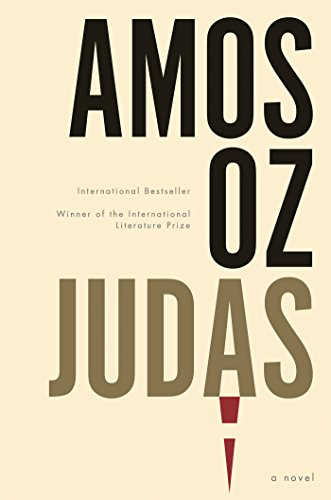
Book review: Judas by Amos Oz
“For Oz’s fans and liberal Zionist fiction readers Judas is a required text whose writing is its own reward.” -- from my review of in New York Journal of Books


Thursday, October 20, 2016
Book review: A Greater Music by Bae Suah
"Bae’s prose alternates between detailed descriptions of everyday life and ruminative passages on music, ideas, and her character’s mental state. The late American poet William Matthews once described his taste in literature as a preference for prosy poetry and poetic prose. A Greater Music exemplifies the latter category; it requires and amply rewards rereading." -- from my review in New York Journal of Books

Wednesday, September 21, 2016
Book review: Two She-Bears by Meir Shalev
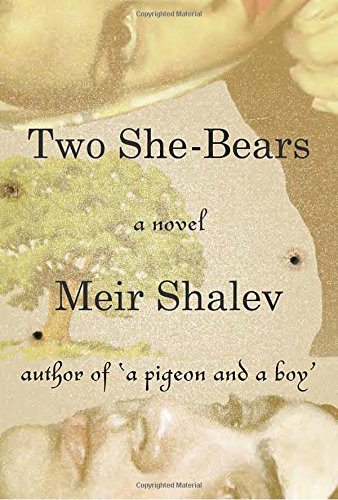
“Is a proclivity to violence and vengeance a gender and/or regional trait? Are the minds of men more than women and/or rural folk more than city dwellers predisposed to violent acts of revenge? Or put another way, are violence and vengeance intrinsic components of the male psyche, and if so are men more likely to resort to them in rural settings? These are the central questions posed by Israeli novelist Meir Shalev in his seventh novel Two She-Bears (in the original Hebrew Shtayim Dubim, Am Oved, 2013).” — the opening paragraph of my review in New York Journal of Books
Wednesday, September 7, 2016
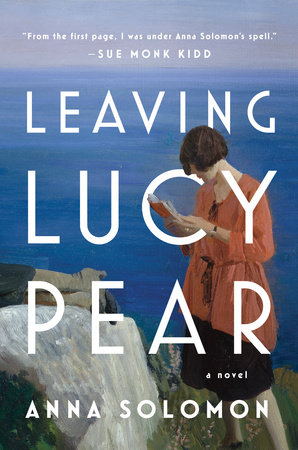
Book review: Leaving Lucy Pear by Anna Solomon
" Leaving Lucy Pear is recommended to readers who enjoy historical fiction, a cast of well developed mainly female characters, and handsome prose." -- from my review in New York Journal of Books
Tuesday, July 19, 2016
Book review: The Lost Civilization of Suolucidir by Susan Daitch

The Lost Civilization of Suolucidir
by Susan Daitch

bookshelves: international-settings, jewish, post-modern, historical-fiction, mysteries, cerebral-fiction
"After reading The Lost Civilization of Suolucidir readers will want to start over again to see what details they may have missed the first time through, and yes, this richly crafted and handsomely written novel rewards rereading. It also demonstrates that an ironic post-modern novel of ideas can be suspenseful and include complex characters readers can care about while feeling powerless to alter their fates." -- from my review of The Lost Civilization of Soulucidir by Susan Daitch in New York Journal of Books
Jul 19, 2016 · David Cooper's review
"After reading The Lost Civilization of Suolucidir readers will want to start over again to see what details they may have missed the first time through, and yes, this richly crafted and handsomely written novel rewards rereading. It also demonstrates that an ironic post-modern novel of ideas can be suspenseful and include complex characters readers can care about while feeling powerless to alter their fates." -- from my review of The Lost Civilization of Soulucidir by Susan Daitch in New York Journal of Books
Wednesday, June 8, 2016
Israeli books: A.B. Yehoshua's The Extra features a child-free heroine
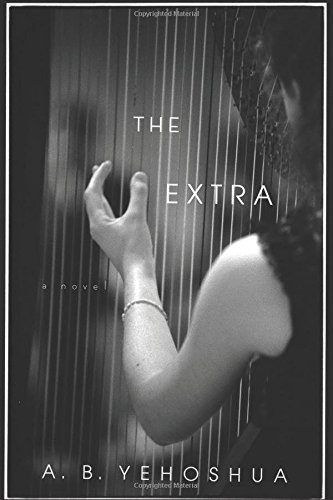
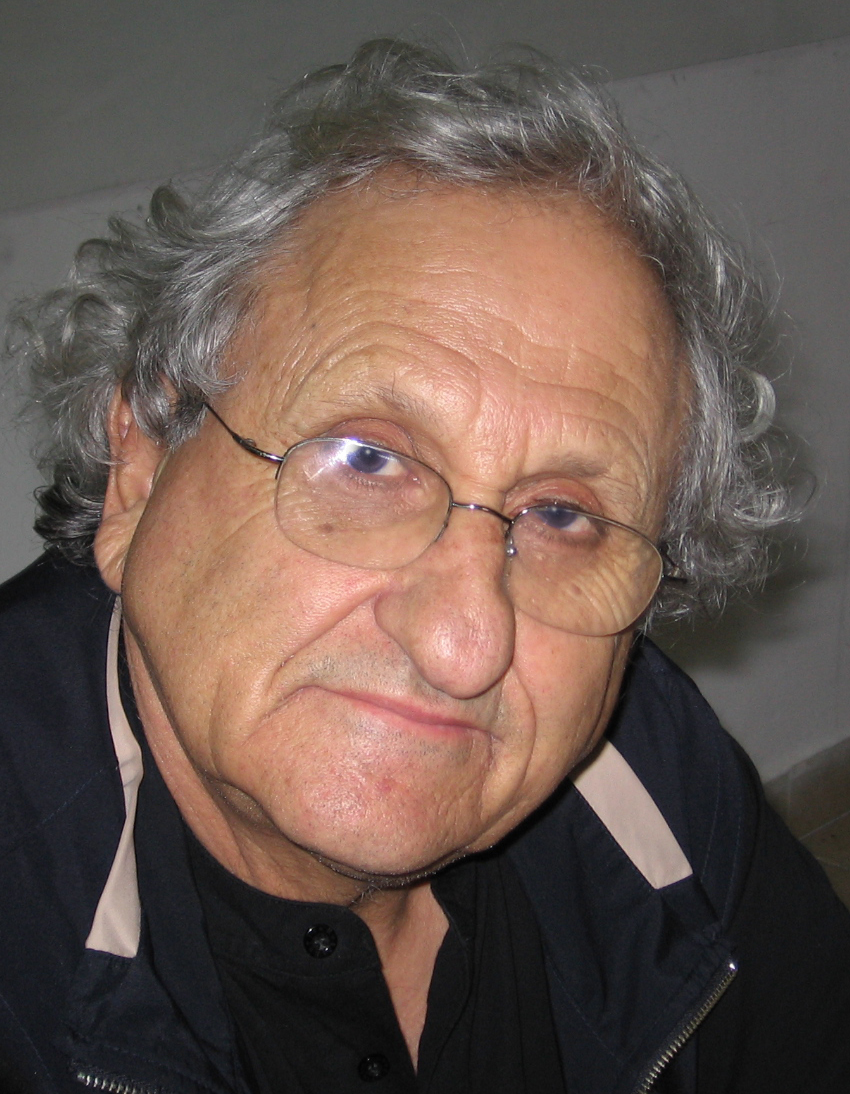
"On the surface the new novel is about feminism and the right of women to choose not to bear children. But an underlying theme is whether liberal nationalism is an oxymoron, whether the rights of the individual (the essence of liberalism) can be reconciled with the needs of the nation." -- from my New York Journal of Books review of The Extra by Abraham B. Yehoshua. For an excerpt from the novel see my addendum to that review below.
The essential objective of nationalism is to ensure that a particular people with a common past will enjoy a common future. The decision by a citizen of a country founded by a nationalist movement not to have children would appear to contradict that national objective. This conflict between individual rights and the needs of the nation is central to The Extra, Israeli novelist A.B. Yehoshua’s newest novel to appear in English translation, which is published today by Boston and New York publisher Houghton Mifflin Harcourt.
The essential objective of nationalism is to ensure that a particular people with a common past will enjoy a common future. The decision by a citizen of a country founded by a nationalist movement not to have children would appear to contradict that national objective. This conflict between individual rights and the needs of the nation is central to The Extra, Israeli novelist A.B. Yehoshua’s newest novel to appear in English translation, which is published today by Boston and New York publisher Houghton Mifflin Harcourt.
In my New York Journal of Books review of The Extra I write,
“On the surface the new novel is about feminism and the right of women to choose not to bear children. But an underlying theme is whether liberal nationalism is an oxymoron, whether the rights of the individual (the essence of liberalism) can be reconciled with the needs of the nation.”
Noga is a 41 soon to be 42 year-old divorced child-free by choice Israeli harpist who lives in Holland where she plays in a regional orchestra. She takes a three month leave of absence from the orchestra to house-sit her elderly mother’s apartment during the latter’s trial residence in an assisted living facility. Her brother Honi, a film and television producer, gets her jobs appearing as an extra in movies, commercials, and an opera performance.
Yehoshua deploys a plot device to arrange for Noga to meet and converse with her former husband Uriah who left her a decade ago when she announced she did not want children and has since remarried and fathered two children with his new wife. Notwithstanding his new family, Uriah is still not at peace with Noga’s choice to be child-free. He tells her,
“‘… Anyway, if even in the beginning you had your doubts about having children, I, as a young man, swept away by love, might have interpreted your hesitation as a teenager’s fleeting radical protest against the state or against the world.’
“‘The state?’
“‘In the hackneyed sense that if Israel is going downhill, better not to have children here.’
“‘I never said that and never thought that. And even if I was sometimes too radical for your taste, I could have given birth to radical children who would aid and abet my radicalism.’
“‘In other words, the future here is not secure, is full of danger.’
“‘No.’ She raises her voice. ‘Who am I to presume to know what will be here in the future? Who am I to decide if the danger is real or only exists in newspaper articles? My parents conceived me during a terrible, shocking war, and still the two of them didn’t presume to know. Oy, Uriah, you won’t get free of a disobedient love if you keep rehashing old stuff.’”
Nonetheless, they continue to rehash the old disagreement that led to their divorce. To add insult to injury Noga’s mother takes Uriah’s side, and her brother Honi helped Uriah get in touch with Noga. Readers can well imagine the relief with which Noga returns to Holland, her orchestra and the work she loves.
I conclude my NYJB review by praising Stuart Schoffman’s translation and Yehoshua’s prose: “Four and a half decades after his first book’s publication his 20th shows Yehoshua’s writing chops are undiminished and his content fearlessly topical.” See that review for a fuller discussion of the novel.
Monday, May 30, 2016
Jewish books: in Max's Diamonds family secrets stalk its ambitious protagonist
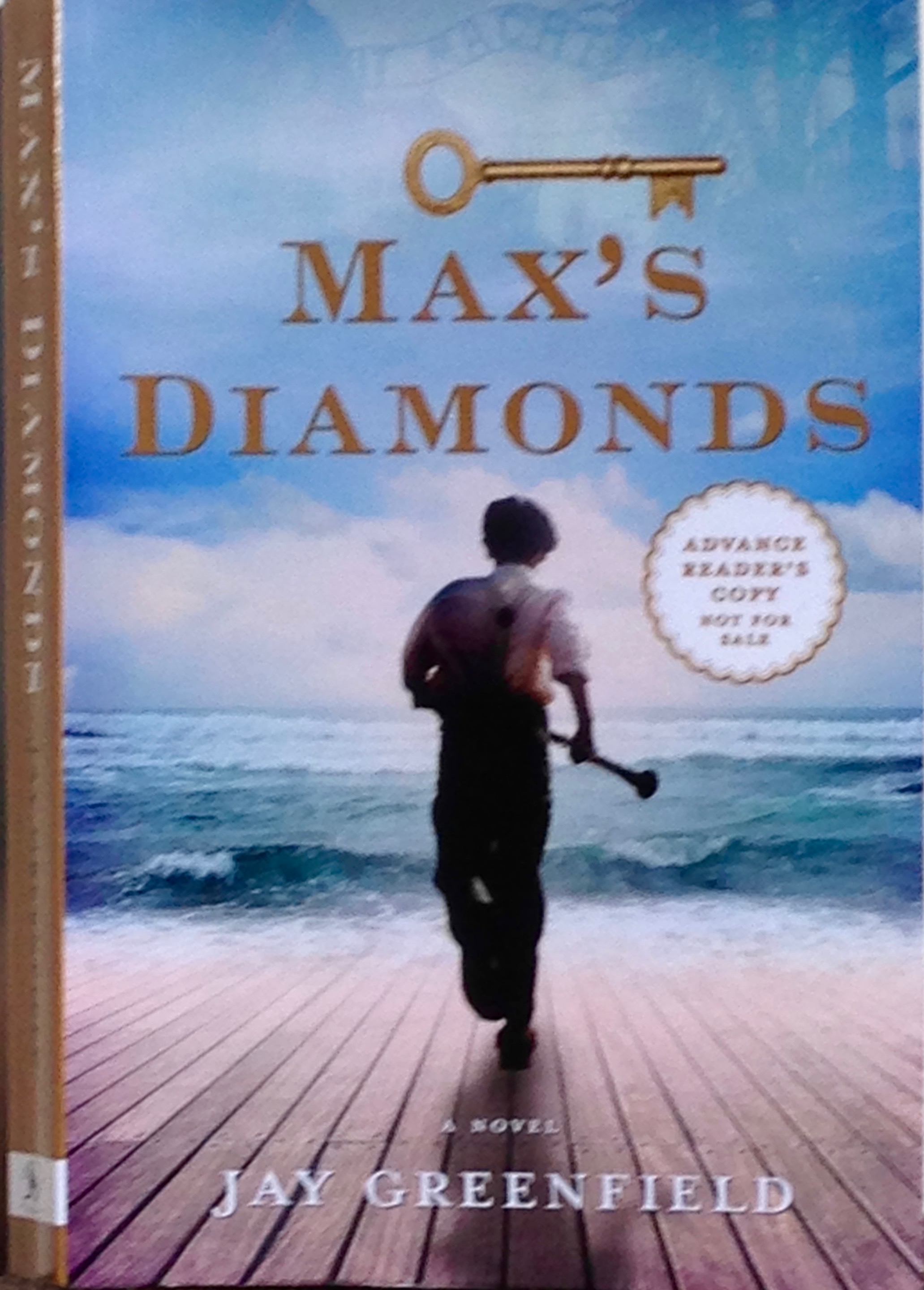 "Max’s Diamonds, Jay Greenfield’s debut novel published last week by New York publisher Chickadee Prince Books, is a guilty pleasure, a book I enjoyed and could barely put down for its suspenseful serpentine plot despite its pedestrian and occasionally heavy-handed prose." -- From my examiner article (which begins in the next paragraph). Also see my New York Journal of Books review, which concludes "with Max's Diamonds readers are rewarded with a fun and absorbing read whose fortuitous May publication date makes it a felicitous beach or airplane book."
Max’s Diamonds, Jay Greenfield’s debut novel published last week by New York publisher Chickadee Prince Books, is a guilty pleasure, a book I enjoyed and could barely put down for its suspenseful serpentine plot despite its pedestrian and occasionally heavy-handed prose. Like Greenfield, the novel’s protagonist Paul Hartman grows up in a Jewish community in Rockaway, Queens and goes on to become a successful lawyer. Greenfield is old enough that like Paul he probably encountered anti-Semitic colleagues early in his legal career. To Greenfield’s credit he makes complex legal cases understandable to the general reader.
But this is a work of fiction, not a memoir, and some of the fictional character’s biographical details differ from those of the author. The eponymous diamonds, which fund Paul’s education, are of unethical provenance, and come with obligations that threaten to impede Paul’s professional advancement. In my New York Journal of Books review of the novel I compare Paul’s predicament trying to balance the irreconcilable demands of his professional ethics and his unethical relatives to that of the young Michael Corleone in The Godfather movies.
According to a mutual friend another difference between the author and his character is that Greenfield’s parents and grandparents were Eastern European Jews whose mother tongue was Yiddish, while Paul’s parents were German speaking Jews from a majority German speaking part of northwestern Bohemia who adopted Yiddish as adults to avoid speaking the language of the Nazis. The elder Hartmans’ decision to switch from German to Yiddish strikes me as implausible and ahistorical.
Historically inaccurate details are distracting to knowledgable readers. We read historical fiction to take our imaginations to another time and place, but when the details don’t fit that time and place the effect is spoiled.
Czech Jews switched from Yiddish to German in the 19th Century, Twentieth Century Bohemian and Moravian Jews were bilingual in German and Czech, Yiddish was no longer spoken, and early 20th Century Jewish writers wrote in German. How would people who did not grow up speaking Yiddish and were never immersed in a Yiddish speaking community suddenly know Yiddish?
Paul’s parents might have learned Yiddish from their Eastern European grocery store customers and fellow Orthodox synagogue congregants and/or taken Yiddish classes offered at The Workman’s Circle, YIVO, or local colleges, and his survivor relatives who arrive after the war might have learned it from other inmates in concentration camps and post-war displaced persons camps, but the narrative doesn’t spell out these details other than to say, “that although German, more than Yiddish, had been his parents’ principal language in Europe, they refused to speak it in America.”
But if the language switch is historically unlikely, it may nonetheless be emotionally accurate. When I recall the strong Jewish identities and sensitivity to anti-Semitism of Holocaust survivors in my acquaintance, the emotional tone of such a plot element seems right even though that specific detail is probably factually false.
I close my NYJB review emphasizing the positive, noting “Max’s Diamonds readers are rewarded with a fun and absorbing read whose fortuitous May publication date makes it a felicitous beach or airplane book.”
Subscribe to:
Posts (Atom)