Tuesday, February 7, 2012

2 Book Reviews: Traumatized Midwesterners & Satan in Sweden

One of the reasons we read fiction is to experience foreign places and lives different from our own which certainly describes two new books published today.
Assisted Living book cover
New York Journal of Books
View1 photo
Stay Awake book cover

In my New York Journal of Books review of Stay Awake, Dan Chaon’s book of short stories about gentile midwesterners, I write, “Highly educated solidly upper-middle class readers” (a description that fits most Jewish New Yorkers in my acquaintance) “…who have lived relatively charmed and fulfilling lives will probably find the violence in these stories shocking and disturbing. Compared to themselves and their bicoastal peers such readers may find these characters from the flyover states lack judgment, keenly focused intelligence, and have difficulty understanding cause and effect or anticipating the consequences of their actions, much less thinking two or three moves ahead on the chessboard of life.”
However, I caution my readers not to judge Mr. Chaon’s characters; I hope I’m not too patronizing when I write: “…these rustbelt characters aren’t just anyone; many of them lack the intellectual skills to thrive in our post-industrial/information age/digital economy, a handicap that increases the likelihood that they will find themselves in the path of life’s calamities and renders them less resilient and resourceful when disaster strikes.”
Jewish New Yorkers who are fascinated by anti-Semites and have very dark yet puerile senses of humor might enjoy Swedish author Nikanor Teratologen’s first novel to be translated into English. In my review of the misleadingly titled Assisted Living I describe its main character as “an incontinent, elderly (born the same day as Heinrich Himmler) yet puerile, militantly male chauvinist, female-phobic gay man who is also a pro-Nazi Aryan supremacist, an anti-intellectual bibliophile with an avid interest in European philosophy and post-modernist literature and theory, a substance abuser, an incestuous pedophile, a murderer, and a cannibal (!) living in rural northeast Sweden.”
I also write of the novel that “because it is so over the top and its horrors so exaggerated, readers who appreciate warped, gallows humor may find parts of it funny despite the pervasive evil.” See the review for examples and excerpts.
via the late examiner.com

Tuesday, January 17, 2012

NY Jewish books: The Flame Alphabet by Ben Marcus


A language epidemic erupts among Jewish families; children’s speech makes their parents deathly ill. Soon it spreads to the rest of the population. This dark fantasy is the premise of Jewish New Yorker Ben Marcus‘s new novel, The Flame Alphabet published today by Knopf. In my New York Journal of Books review I write,
The Flame Alphabet book coverNew York Journal of Books
“Ben Marcus was already known as a daring, experimental writer’s writer on the strength of his three previous books of fiction. The good news for the general reading public is that his fourth book, The Flame Alphabet, is his most accessible to date, and its comparative clarity and linearity in no way diminishes its power, inventiveness, and originality. The quality of the writing also compensates for the book’s thin character development. Instead, Mr. Marcus deploys his potent prose to tell a tale about a world in which all language becomes lethal.”
One of Mr. Marcus’ inventions is a new form of Judaism in which couples worship in forest hideouts on Thursdays instead of Friday nights and Saturdays. Like the epidemic itself, this aspect of the novel requires a suspesion of disbelief. The ominous nature of the fictional events lends the narrative a sense of gravitas that Mr. Marcus’ prose style is well equiped to express. While the book has all the necessary elements to make it a cult classic, a book this well written deserves the widest possible audience.

Sunday, January 15, 2012

Arthur Green on Abraham Joshua Heschel and Hasidism

Rabbi Jeff Marker's synopsis of Arthur Green's talk on Abraham Joshua Heschel and Hasidism.

"For Heschel the most significant mitzvot are
  Feeding the poor, ending war, marching with MLK.
  These are spiritual acts, not just political.
  These are the acts for which we were created.

"Heschel’s God was very personal, but we must do the work for God."

Originally posted by at Arthur Green on Abraham Joshua Heschel and Hasidism

On Thursday evening I went to the Abraham Joshua Heschel School and heard a lecture by Arthur Green titled “What Heschel Learned From Hasidism.”  Green was a close student of Heschel when he was a rabbinical student at the Jewish Theological Seminary in the 1960s.  It was a brilliant talk, though I thought I would share what I managed to take down and remember.

First of all, Green said, Heschel would have hated the title of the talk.  He did not like divisions in Jewish life.  He bridged worlds and was critical of all of them.  He wrote about many of them.

Heschel was a living link to the lost world of Jewish Europe.  In his first real appearance on the public stage in Americal, at YIVO in 1944, he spoke about that lost world.  He later expanded this into his book “The Earth is the Lord’s.”  Around the same time, in 1943-44, he reclaimed his middle name.  Before that he was known, and wrote as, Abraham Heschel.  After this he was Abraham Joshua Heschel.  This was the name of his famous great great grandfather and reflected his Hassidic identity.  His family was from the Ukrainian school of hasidism which was a kind of peasant hasidism.  His father was an immigrant to Warsaw which was generally dominated by the Ger/Kutsk school, which was more rational and skeptical of miracle workers and similar stories.  There were no yeshivas reflecting his heritage, and his early education was under the influence of Ger.  Heschel later said he lived between these two worlds, Medzibush and Kutsk.

Heschel grew to see the Hasidic world as “small minded” and wanted a secular education.  It would have been a scandal for him, scion of a Hasidic dynasty, to go to a secular gymnasium in Warsaw.  His tutor arranged for him to attend a gymnasium in Vilna, a center of the anti-Hasidic misnagdim.  After a year he enrolled in university in Berlin.  He also wrote poetry.  In time he learned to speak in Biblical language which was accessible to both Jews and Chrisitians.

So, what did Heschel learn from Hasidism?  Green says five things, and he will especially expand on the fifth.

A sense of wonder -  “The whole world is full of God’s glory!”

There is nothing you can prove
    Religious truth is about testifying, not proving.  His book “The Sabbath” is an expansion on ideas in
    “Sfas Emes,” a book by an earlier Gerer rebbe.

He understood the need for charismatic religious figures, but saw corruption in the Hasidic world.
    So he went back to the prophets as his authentic “rebbes.”
    (Buber, the outsider, could romanticize Hasidic leaders, not Heschel)
    His lecture “Did Maimonedes think he had attained prophesy?” actually applies to him also.
    He did become a prophetic figure, and saw it in Martin Luther King Jr. which led him to accept it             also in himself.
    There is a Hasidic expression “Zogt Torah” - to speak Torah (different from to learn or teach).
        The word IS the Torah.

Chesed and Simcha - Loving Kindness and Joy
    Even his criticism is through chesed.  
    His Judaism is of love and joy.  He rarely spoke about sin or repentance (unlike Solevetchik)
    He focuses on action, to do good, not focus on sin and guilt.  There not much reference to                 Messianism.  He is more interested in We redeeming God, not God redeeming us.

“God in Search of Man” - God needs us!
    The way we act is meaningful to God, it makes a difference, even in a cosmic sense.
    (This is contrary to Mainmonedes who says God is perfect, has no needs)
    This idea goes back to Ramban, Nachmanedes.  Mitzvot bring the Shechinah out of exile.

Heschel traced this debate back to Rabbis Akiba and Ishmael in the second century of the common era.
    Ishmael - the Mishkan (Tabernacle) is only post Golden Calf.  The people need it.
    Akiba - Mishkan is renewal of creation, full of secrets of creation.

Heschel derived this from Hasidism
    For early hasidim, all mitzvot/acts have cosmic significance.
    For later hasidim, the acts of the rebbes have this significance.

For Heschel the most significant mitzvot are
    Feeding the poor, ending war, marching with MLK.
    These are spiritual acts, not just political.
    These are the acts for which we were created.

Heschel’s God was very personal, but we must do the work for God
    (still balancing Metzibush and Kutsk)

These are my rough notes on a very polished talk, but I hope they give a sense of it.

Posted via email from davidfcooper's posterous

Monday, January 9, 2012

The Economist: new research challenges Chomsky's linguistics

The evolution of language

Babel or babble?

Languages all have their roots in the same part of the world. But they are not as similar to each other as was once thought

Apr 14th 2011 | from the print edition

via economist.com

Posted via email from davidfcooper's posterous

Monday, January 2, 2012

2011 Jewish fiction and poetry books


2011 Jewish fiction and poetry books   (a list of Jewish fiction and poetry books I reviewed in the past year).


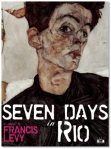
Egon Schiele’s striking 1912 self-portrait is the cover image for Seven Days in Rio by Francis Levy.New York Journal of Books

Wednesday, December 28, 2011

Farewell Helen Frankenthaler (1928-2011)

Video portrait by John Feldman of artist Helen Frankenthaler commissioned by Purchase College School of the Arts for the 2008 Nelson A. Rockerfeller awards.

LA Times obit

NY Times critic's notebook: Two Artists Who Embraced Freedom

Posted via email from davidfcooper's posterous

Robert Reich: My Political Prediction for 2012: It's Obama-Clinton

robertreich:

My political prediction for 2012 (based on absolutely no inside information): Hillary Clinton and Joe Biden swap places. Biden becomes Secretary of State — a position he’s apparently coveted for years. And Hillary Clinton, Vice President.

So the Democratic ticket for 2012 is Obama-Clinton.

Why...


Posted via email from davidfcooper's posterous